





Breaking Down Silos: Building a Unified Front for Youth Success
On a Tuesday evening in Pima County, a mother sits at her kitchen table looking at a scattered deck of business cards. One belongs to a local probation officer. Another bears the logo of a high school counseling center. A third card is from a court-appointed therapist, and a fourth lists the direct extension of a state caseworker. Each professional means well and holds a vital piece of her teenager's future. Yet, when she looks at the colorful rectangles spread across the wood surface, she feels only exhaustion.
This scene plays out in dining rooms across the country every single night. Families of at-risk youth are often asked to navigate a maze of disconnected systems. When a therapist, a probation officer, and a school counselor do not communicate, their expectations inevitably clash. A school might penalize a student for truancy, while a court mandates daytime treatment hours that pull the student out of class. The family is caught in the middle of these competing demands. The youth, seeing the cracks in the foundation, slips right through them.
The youth, seeing the cracks in the foundation, slips right through them.
Exceptional clinical interventions will falter if a teenager's broader environment remains disjointed. At VQ (VisionQuest National, Ltd.), we know that treating trauma and changing behavior requires more than a weekly therapy session. It requires an active, coordinated front. Since Robert L. Burton founded the organization in Tucson in 1973, our mission has been rooted in practical, evidence-based care. That care relies on ensuring every adult in a teenager's life operates from the exact same playbook.
The Hidden Cost of Fragmented Care
When human services operate in silos, the burden of translation falls on parents who are already stretched too thin. They are forced to act as messengers between agencies that use entirely different languages. Child welfare caseworkers focus heavily on family stability and home environments. Juvenile justice partners prioritize community safety, accountability, and court compliance. Educators look at credit recovery and behavioral triggers in the classroom.
Without a unified strategy, these competing priorities create chaos. The mother in Pima County might receive conflicting advice on how to handle her teenager's outbursts. One system demands strict consequences, while another suggests therapeutic leniency. This confusion leads to severe family burnout. It also increases the likelihood that a teenager will disengage entirely, viewing the adults in their life as disorganized and out of touch.
To prevent this downward spiral, service providers must step out of their silos. We cannot expect families to build the bridges between massive state bureaucracies. The providers themselves must take on the responsibility of alignment.
Case Management as the Unifying Force
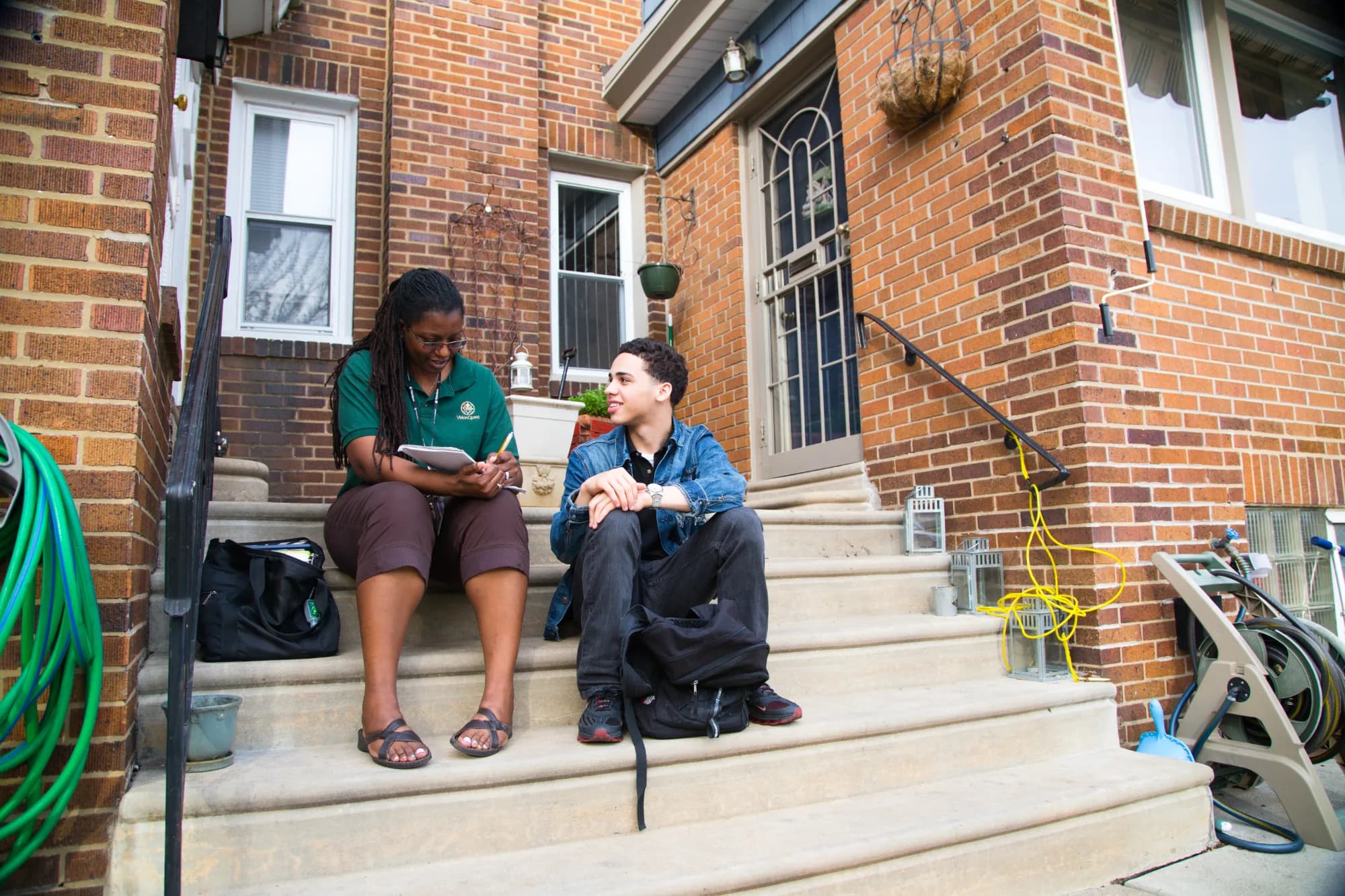
True wrap-around support goes far beyond handing a family a printed list of community resources. Case management should never be a passive exercise in referrals. At VQ, case management is an active, boots-on-the-ground discipline. We view our role as the connective tissue that aligns schools, courts, healthcare providers, and social services into a single, cohesive strategy.
Operating across Arizona, Delaware, Maryland, Pennsylvania, and Texas, our teams employ a consistent philosophy. We do not just provide interventions; we actively manage the moving parts. A dedicated case manager acts as the primary point of contact, absorbing the logistical stress that usually falls on the family.
We want families to focus on healing, not administration.
"We want families to focus on healing, not administration," notes a VQ regional clinical director. "When we handle the coordination between the courts and the schools, parents can finally go back to just being parents." If a probation officer needs a behavioral update, the case manager provides it promptly. If a teacher notices a change in a student's mood, the case manager relays that observation directly to the clinical team.
This continuous loop of communication ensures that expectations are clear and progress is accurately tracked. State agencies value vendors who solve problems rather than create new ones. By taking ownership of the coordination, VQ lightens the caseload for referring partners and brings profound clarity to the family.
What Collaboration Looks Like in Practice
Alignment requires deliberate action and constant communication. VQ staff members integrate themselves into the community to ensure that every facet of a teenager's life supports their long-term growth. We utilize a trauma-informed framework to guide these interactions. This ensures that every professional involved understands the root causes of a teenager's behavior, rather than just reacting to the symptoms.
This multi-system collaboration typically involves several core focus areas:
- Educational Advocacy: VQ staff regularly attend Individualized Education Program (IEP) meetings. We communicate directly with teachers about behavioral triggers and work collaboratively to address truancy head-on.
- Justice and Child Welfare Coordination: We provide clear, transparent, and timely reporting to judges, probation officers, and state caseworkers. This proactive reporting ensures compliance and highlights measurable progress in real time.
- Clinical Integration: We ensure that community therapists, psychiatrists, and medical professionals share vital updates. This guarantees that medication management and behavioral goals remain perfectly aligned.
- Transition to Independence: For older teenagers entering semi-independent living, we actively connect them with local employers, trade programs, and housing resources. We make sure their safety net remains intact long after they graduate from our direct care.

Designing Sustainable Success
The ultimate goal of connecting these systems is to build an environment where at-risk youth can succeed long after formal services end. When expectations are aligned across the board, families experience a dramatic reduction in burnout. They no longer feel like they are fighting a sprawling bureaucracy alone. Instead, they feel supported by a unified team of professionals who truly care about their child's future.
This alignment produces measurable results. School attendance increases when educators and therapists work together to remove barriers to learning. Recidivism rates drop when probation officers and case managers reinforce the same positive behaviors in the community. State stakeholders see a higher return on their investment because the interventions are sustained by an aligned community network.
50years of programs recognizing the complexity of a teenager's lifeFor fifty years, the navy, gold, and cream emblem of VQ has stood for programs that recognize the immense complexity of a teenager's life. We know that real change requires a village that actually talks to one another. By bringing courts, schools, and families to the same table, we create a stable foundation for the future. The work of changing a life is never solitary, and the most successful outcomes always stem from a community moving forward together.