Youth
Safe, valued, and honored at every step.
VQ has supported children, youth, and their families since 1973, adapting our work as the needs of communities change, while keeping the same core promise.
With fifty years of experience, VQ provides children, youth, and families with trauma-informed, guided centering practice to promote their highest potential. Our services are designed and delivered with four foundational principles:
Safe, valued, and honored at every step.
Supported with the tools and trust they need to lead.
Respected partners in every plan of care.
Protected, impacted, and meaningfully involved.
VQ, originally founded as VisionQuest National, Ltd., was established in 1973 in Tucson, Arizona by founder Robert L. Burton. While working in the harsh and ineffective juvenile corrections systems of the 1960s, Bob became a VISTA volunteer with Native American communities in the northern plains.
There he met Dan Old Elk, a leader in the Crow Nation who introduced Bob to the rite-of-passage ceremony, a "vision quest", meant to help a young person move from the confusion of adolescence into adulthood. Inspired, Bob envisioned a healthier, more humane way to care for America's most at-risk youth.
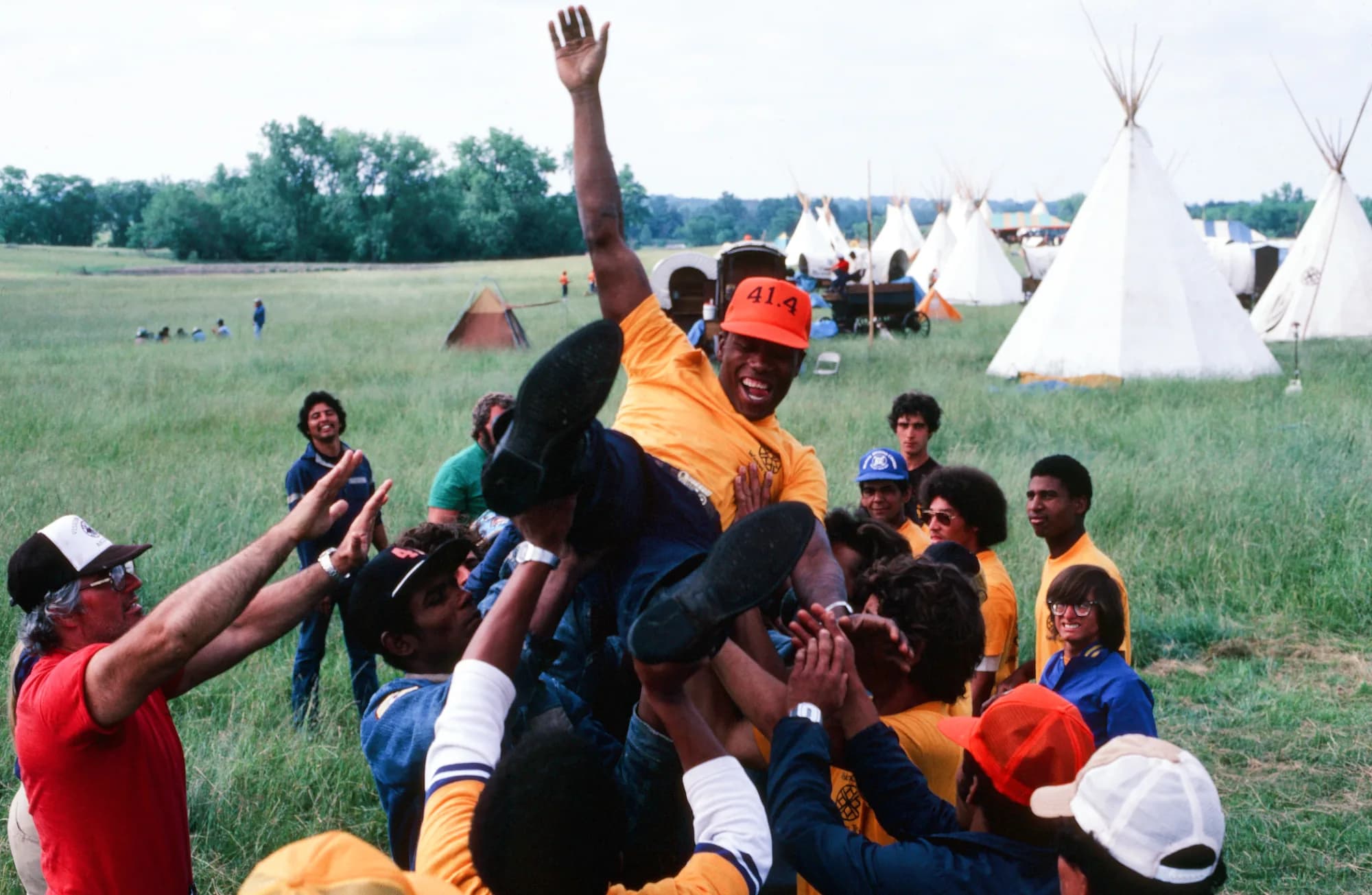
In 1976, during the country's Bicentennial, VisionQuest launched its trademark wagon train program. Moving across the country powered by mules, youth, and dedicated staff, this innovative approach garnered widespread national attention. It established VQ as a pioneer in moving away from large, state-run institutions and toward unique, deeply meaningful therapeutic experiences.
Over the years, more than 200,000 young people have participated in VQ's adventure-based and community-based programming across the nation.
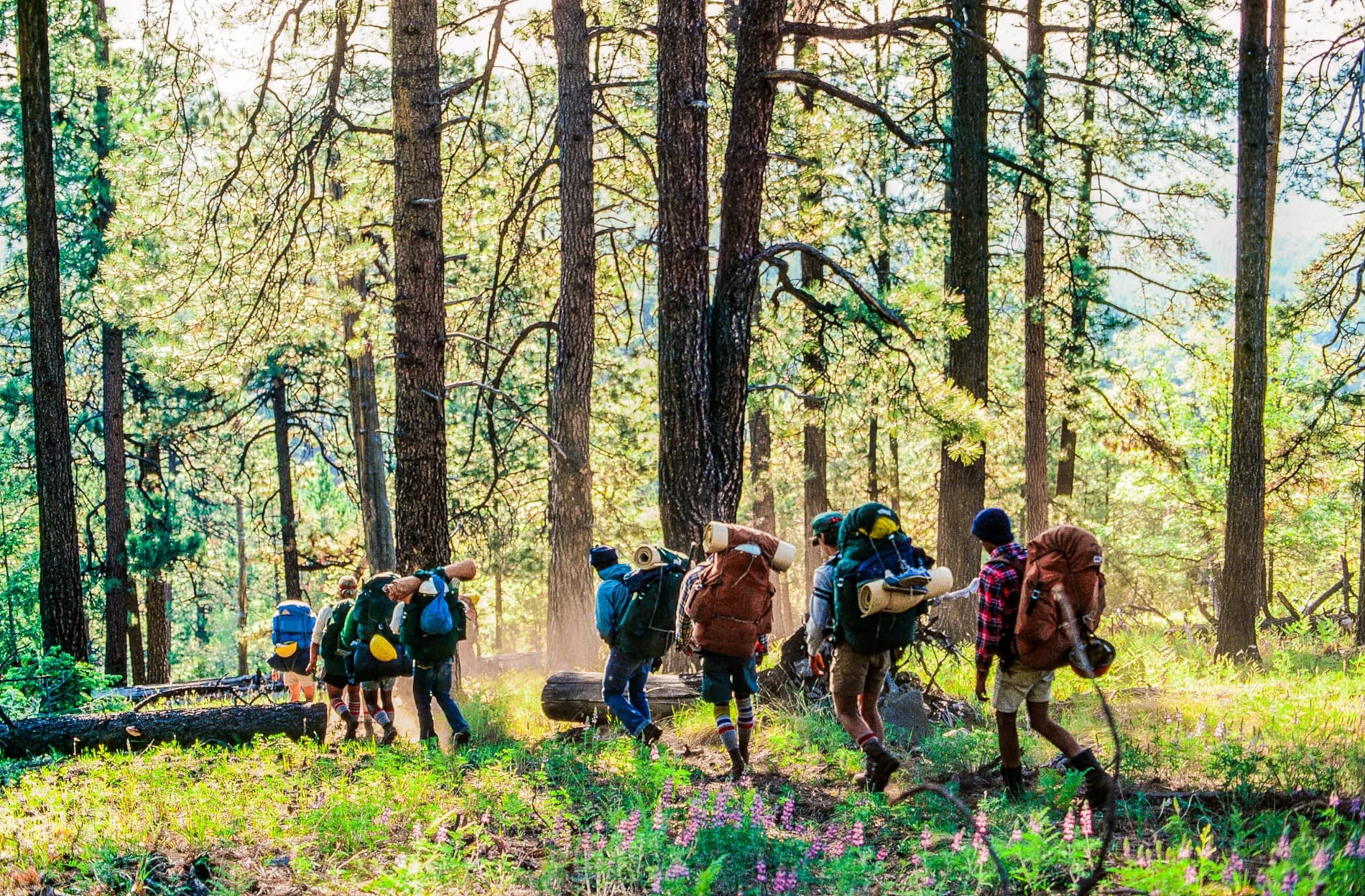
Founded in Tucson, working with youth and families.
“In 1973, I walked away from my career in the juvenile-justice institutions of the time, because I believed troubled young people deserved something more human than containment.”
I believed healing came through relationship, purpose, responsibility, community, and a connection to something larger than ourselves.
That belief changed my life.
As a VISTA volunteer with the Crow Tribe in Montana, I was deeply influenced by the teachings surrounding the vision quest, the medicine wheel, and the understanding that every person carries a story, a wound, a purpose, and a place within the circle. During that time, I formed a lifelong friendship with Dan Old Elk, whose wisdom, partnership, and trust helped shape the foundation of VisionQuest. Being welcomed into his family and entrusted with the respectful use of tribal teachings remains one of the greatest honors of my life.
We became pioneers in more ways than one.
In 1976, we launched wagon-train journeys that crossed the country with mules, committed staff, and young people many others had already given up on. We worked with the so-called “toughest kids,” and we found the same thing over and over again. Behind the anger, addiction, violence, trauma or failure, was usually pain, isolation, fear, and the absence of belonging.
Over the next five decades, more than 200,000 young people participated in VisionQuest programs across the country. The methods changed over time, but the lesson never did.
People heal best when they are seen, challenged, connected, and valued.
Today, in 2026, our communities face different pressures but the same human needs. Anxiety, depression, addiction, disconnection, family fracture, loneliness, technology overload, trauma, and emotional exhaustion now affect people across every age group, background, and income level. The line between “at-risk” and “not at-risk” has become harder to define because so many individuals and families are carrying invisible burdens without the support systems previous generations once had.
The truth is that many people are struggling quietly. Not only young people, but parents, caregivers, families, and entire communities. The future of human services must become more whole-person, relational, and community-centered.
Diagnosis matters, but dignity matters too. Treatment matters, but belonging matters too. Technology can help us, but human connection still heals.
The old medicine wheel teachings from my time with the Crow remain surprisingly relevant today: balance is important. Mind, body, spirit, family, community, responsibility, and meaning are all connected. When one part suffers, the whole circle feels it.
At 85 years old, I remain hopeful because I have seen people recover when others thought they never would. I have seen young people rediscover purpose. I have seen families rebuild trust. I have seen hardened systems learn compassion. And I believe our greatest opportunity still lies ahead, not simply to treat illness, but to help people reconnect with themselves, with one another, and with a sense of purpose.
That work belongs not only to programs like VisionQuest, but to all of us.
The journey continues.
We were originally founded as VisionQuest. The name honors a centuries-old Indigenous ceremony, a rite of passage that marks the move from youth into adulthood.
A vision quest is a rite-of-passage ceremony practiced by many Indigenous nations of North America, most widely documented among the Plains peoples. On the cusp of adulthood, a young person would withdraw from the community to fast, pray, and seek understanding of their place in the world. The quest could last several days, often in a remote, sacred place, and was guided by elders.
At the heart of the practice is a simple idea, that a young person needs structured passage, mentorship, and meaningful challenge to step into adult responsibility. The journey is difficult by design, and the community welcomes the young person back transformed.
We carry the name VisionQuest with respect. Our programs are not the ceremony itself, that belongs to the nations who keep it, but our work is shaped by the conviction that every young person is owed the same care, intention, and respect that the tradition extends to its young.
For 50 years, VQ has operated as a trusted partner and contracted child welfare and youth services provider. Delivering high-quality care requires seamless collaboration across every level of government, from local counties to federal agencies. Here is how the funding, contracting, and accountability process actually works:
Program funding is sustained through a combination of federal, state, and local resources. Federal dollars from the Department of Health and Human Services (HHS), including ACF programs like Title IV-E, Title IV-B, and TANF, alongside Medicaid, flow down to state child welfare and health agencies. These federal streams are directly supplemented by state general funds and local county tax appropriations, creating a robust, layered funding model dedicated to supporting vulnerable youth and families.
States, counties, and local municipalities identify gaps in care and publish Requests for Proposals (RFPs). VQ responds with rigorous clinical models, specialized staffing plans, and transparent budgets. Contracts are awarded through competitive, rubric-based public reviews that ensure only qualified organizations are selected.
Under these strict public contracts, VQ manages the day-to-day operations. We run the homes, employ the licensed and trained professionals, and deliver the hands-on work across our entire continuum, including community-based services, residential treatment, long-term foster care, and shelter programs.
Every contract at the local, state, and federal level carries intense scrutiny. VQ maintains rigorous compliance through performance metrics, monthly outcomes reporting, annual licensing reviews, precise fiscal audits, and independent external clinical reviews. Public dollars buy both life-changing services and complete operational transparency.
Leaders and practitioners across the VQ network. Profiles on this page are curated by VQ admins, title, photo, and short bio come directly from each person's profile.


